Player load & wellbeing monitoring
Know what the week
actually cost.
Your players rate every session in forty seconds, from the phone in their hand. You get load, monotony and strain — per player, per microcycle — before anyone plans the next one.
Team average load in arbitrary units across one microcycle — day off to day off, labelled by distance from the match. Every club plans this shape. Almost none of them measure it.
Monday morning
The whole week, on one screen.
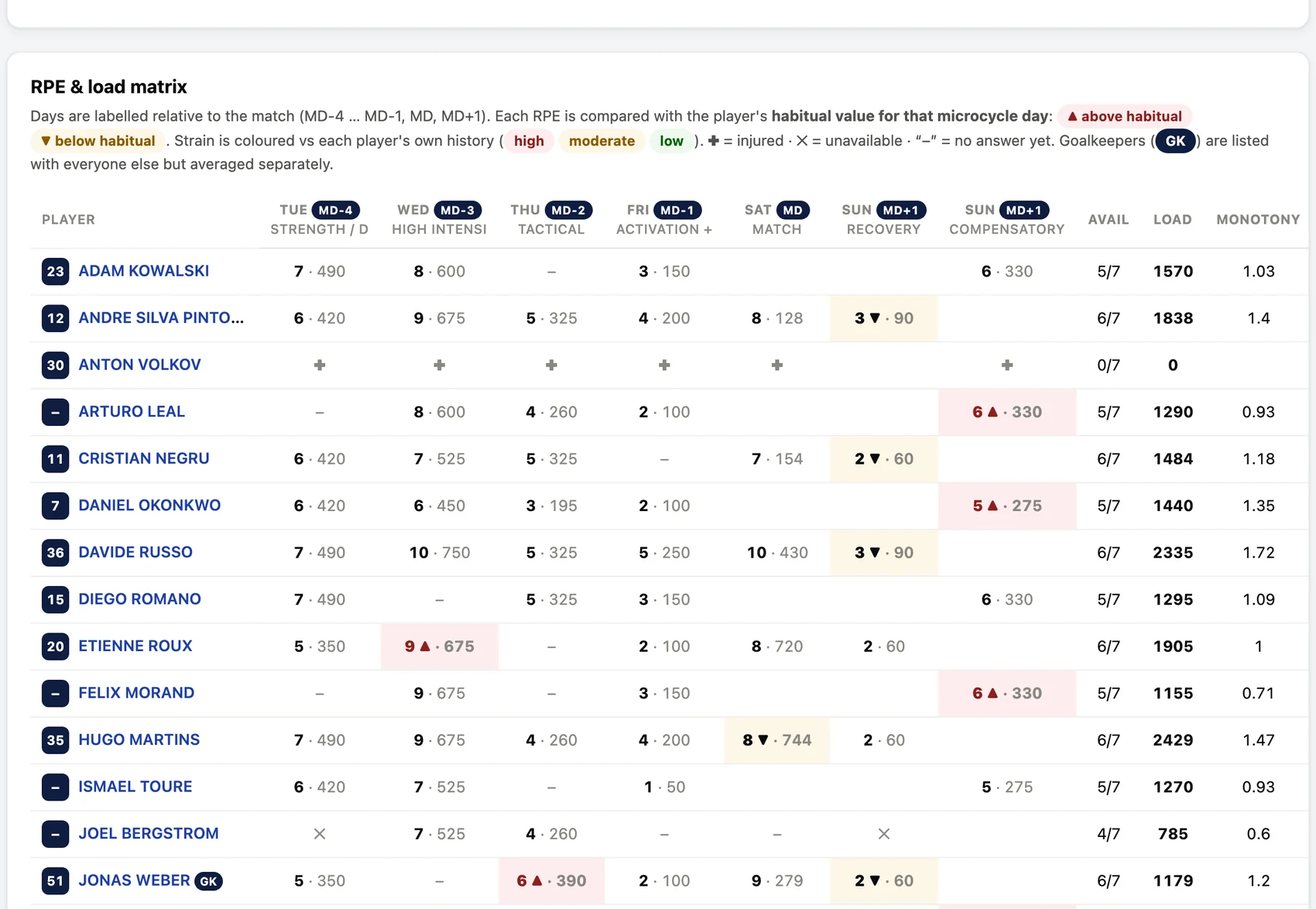
Every player, every session, every rating — with the days labelled the way your staff already talk about them.
- Highlighted cells
- An effort above or below what that player normally gives on that day of the week — not above the squad average.
- Strain, traffic-lit
- Coloured against each player's own history, so a high number means high for him.
- Goalkeepers
- Listed with everyone else, kept out of the outfield averages. Their work is a different type.
07:30 · before training
Ask once, every morning.
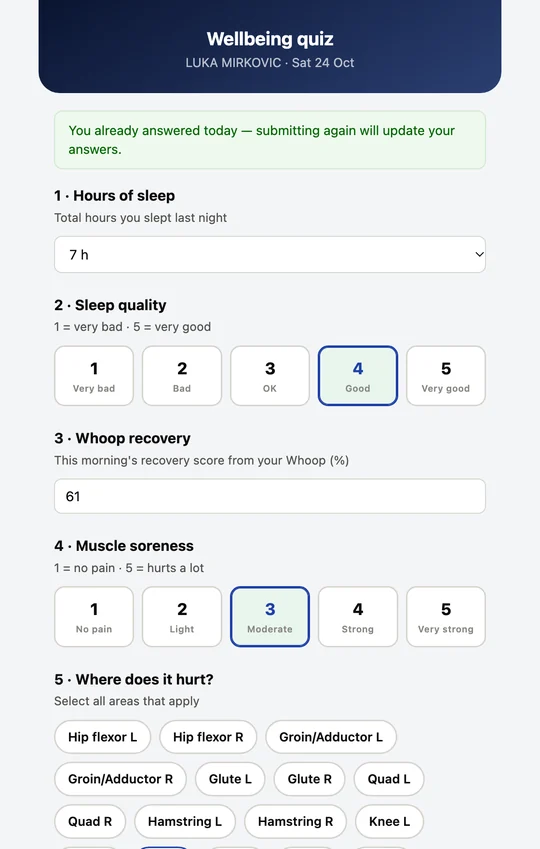
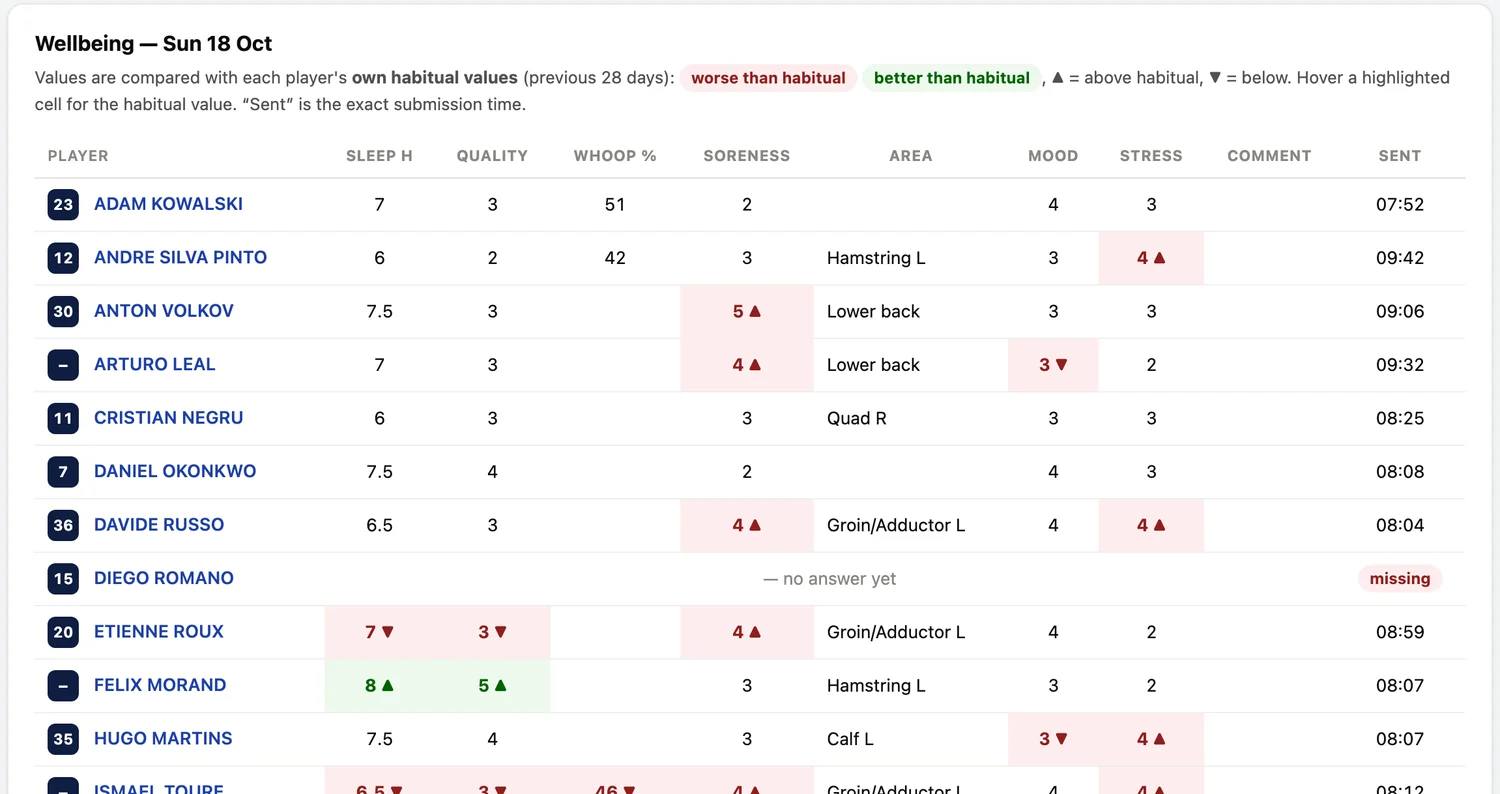
Sleep, soreness and where it hurts, mood, stress — and recovery for the players wearing a strap. Each answer is compared with that player's own twenty-eight day normal.
No app store. No account. No password. A link in the squad's group chat.
20:50 · after the whistle
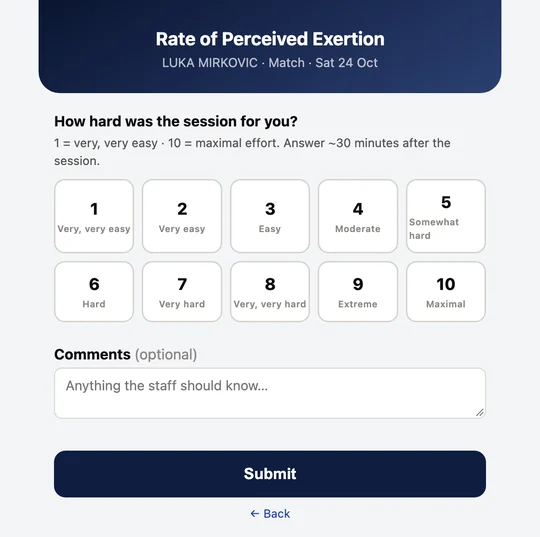
One number. Nothing to type.
How hard was it, one to ten, half an hour after the session. Multiplied by the minutes that player actually played — which is the only honest way to measure what a substitute did.
A nine o'clock kick-off ends at eleven. The rating stays open until two.
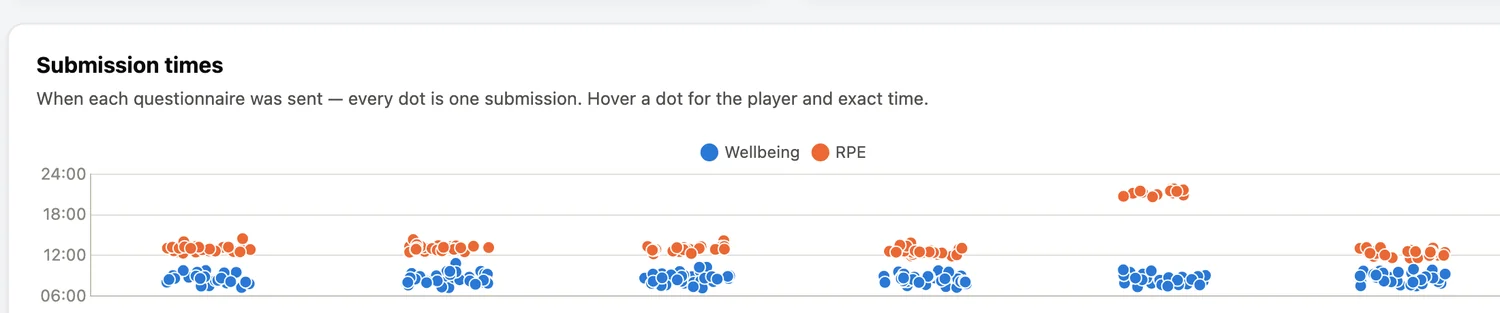
And you can see when they answered.
Every dot is one submission, at the minute it arrived. A rating typed from memory two days later stops looking like an honest one.
The method
The same arithmetic your staff already trust.
Nothing invented, nothing proprietary. Foster's session-RPE method, computed the moment the last player answers instead of on Thursday when somebody has time.
Foster, 1998. Microcycles run day off to day off, so a double-game week is two cycles, not a broken one.
Ownership
It runs on your account, not ours.
The club chooses where it lives and pays that provider directly. The installation, the database and every answer in it belong to the club. If we vanished tomorrow it would keep running.
Licence
Bought once, perpetual. Support is a separate decision you can take later, or never.
Player data
Soreness and injury records are health data. A player privacy notice ships with the app and the club stays the controller.
Leaving
Full database backup and an Excel export of any microcycle, on demand. No exit to negotiate.
Set it up with your own squad.
A working installation on your infrastructure, your players loaded, your staff trained — inside a day. Then decide.
Or look round it first — the live demo is a real installation with an invented squad.
In daily use at a first-division club since July 2026